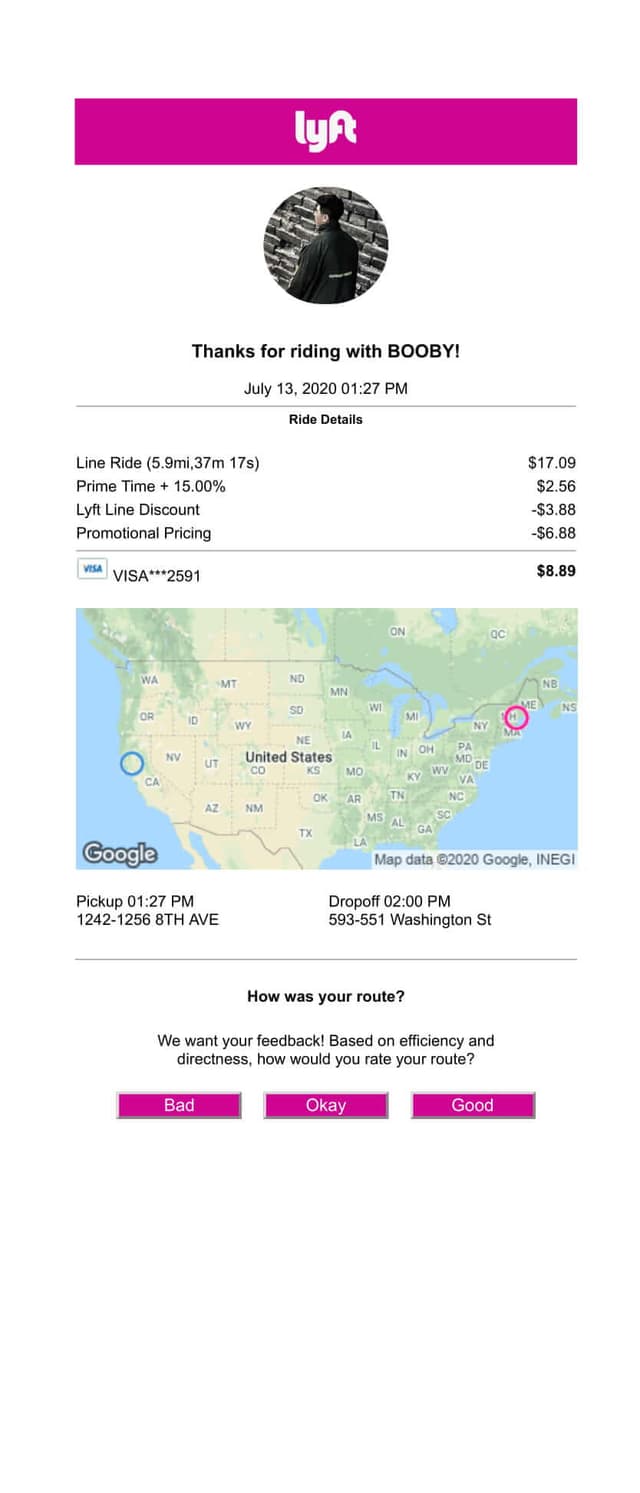
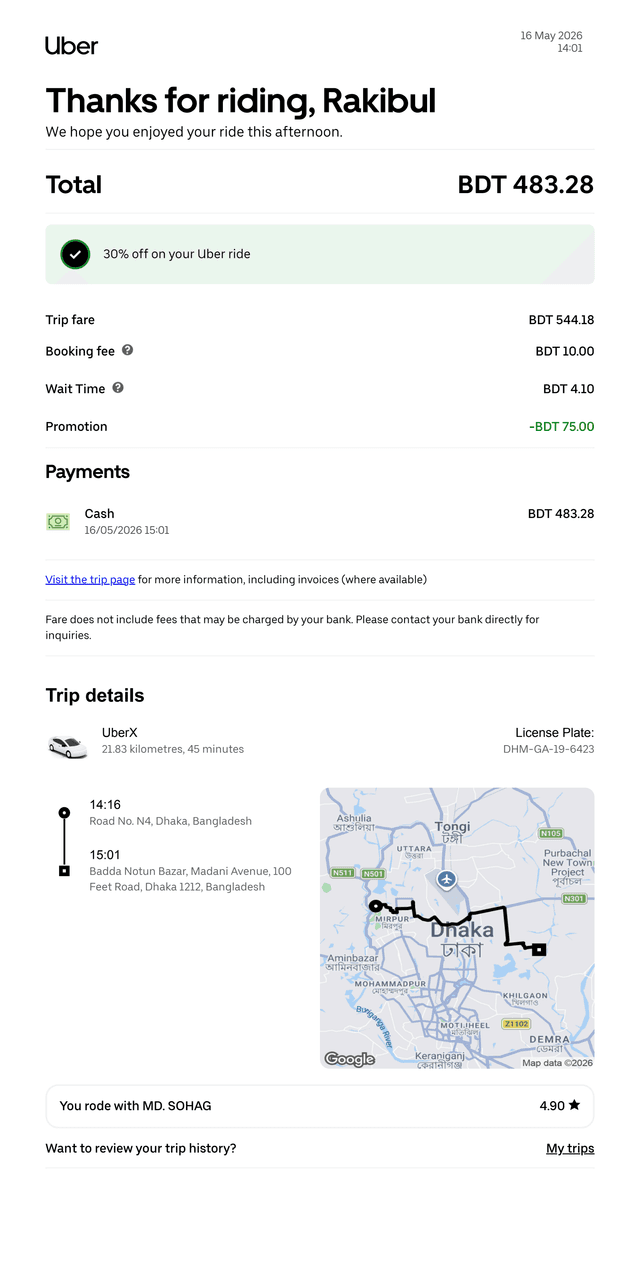
Taxi receipts with the fare detail passengers actually need to get reimbursed
Base fare, distance, waiting time, tolls and tip, plus where the trip started and ended. Here is what a taxi receipt has to show, why the breakdown matters more than the total, and how drivers and fleets can issue one on the spot.
A taxi receipt breaks a single fare into its components rather than showing one figure.
Pickup and drop-off with timestamps are what prove the journey happened, not just the payment.
Most single fares fall under the US $75 threshold, where no receipt is required — though a written record still is.
Surge, cancellation and cleaning fees cause almost every dispute, so give each its own line.
Rideshare formats for Uber, and Lyft sit under this category, alongside metered cab and airport transfer layouts.
A fare is one number, but a claim needs several. Which portion was the base charge, how far the trip ran, whether surge pricing applied, what the tolls cost, what was tipped. A receipt that shows the total alone leaves the passenger to reconstruct all of it from memory, usually weeks later at the worst possible moment, and leaves the driver answering a query that a properly itemised slip would have settled at the kerb.
What a reimbursement reviewer checks, and what licensing rules expect a driver to produce.
FIELD | WHY IT MATTERS | STATUS |
|---|---|---|
Pickup address and time | Establishes where and when the journey began. Half of what proves the trip took place. | Required |
Drop-off address and time | Without it the receipt shows a payment but not a journey. The single most commonly missing field. | Required |
Distance travelled | Supports the fare calculation and any mileage cross-check by the claimant. | Required |
Base fare | The standing charge before distance or time is applied. First line of the breakdown. | Required |
Distance and time charges | Shown separately so the passenger can verify the meter against the route. | Required |
Surge or Prime Time | State the multiplier, not just the amount. The most queried line on any fare. | Required |
Tolls and surcharges | Airport fees, bridge and tunnel tolls, night or holiday rates. Each on its own line. | Required |
Cancellation or cleaning fee | Name the charge and the trip it relates to. Unexplained, these become chargebacks. | Required |
Tip | Separated from the fare so the claimant can apply their own employer policy to it. | Required |
Total and payment method | The amount charged and the card or cash it was settled with, for statement matching. | Required |
Driver name and vehicle registration | Identifies who carried the passenger. Required by many licensing authorities. | Required |
Trip or receipt number | Makes the journey retrievable if the passenger needs a copy months later. | Required |
Create a taxi receipt in four steps
Pick a fare template
Start from a metered cab, rideshare, airport transfer or flat-rate layout rather than a blank page.
Enter the trip
Pickup, drop-off, distance and duration. Your operator details and vehicle carry over from the last receipt.
Break out the fare
Base, distance, time, then any surge, toll or fee on its own line. Tip goes separately from the fare.
Download or send
Export as PDF or PNG, or email it to the passenger before they close the door.