You must keep the receipts because they back up what you claimed, settle disputes you did not see coming, and catch billing errors before they cost you. This guide covers the reasons that matter, plus the part most articles skip: how long to hold each one.
TL;DR
- Keep receipts to prove expenses, claim deductions, get reimbursed, and dispute wrong charges.
- US: 3 years is standard. Six years if you underreported income by 25% or more, and no limit at all if you never filed (IRS, 2026).
- Elsewhere: 5 years in the UK and Australia, 6 in Canada.
- Under $75, US travel expenses need no receipt at all, though lodging always does (IRS, 2026).
- Digital copies are fine. The IRS has accepted them since 1997, and they outlast thermal paper, which fades.
Why you must keep the receipts
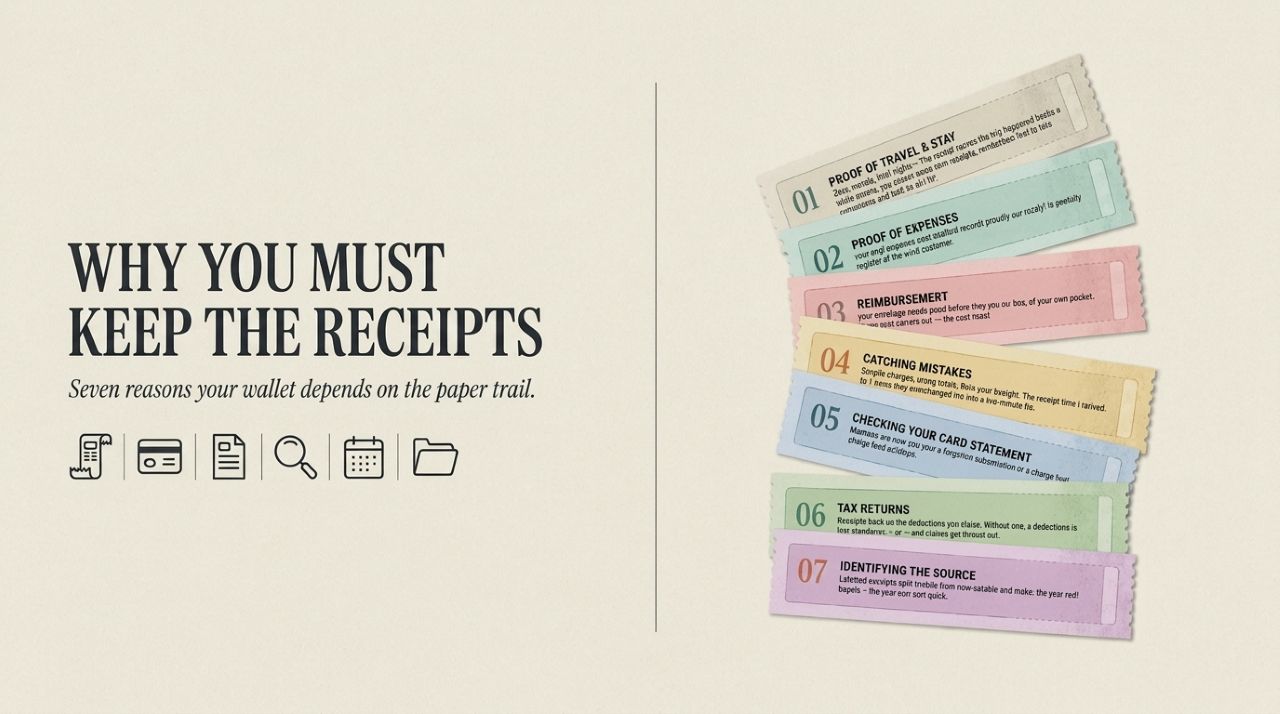
- Proof of travel and stay. On a work trip you pay for taxis, meals, and a bed. A receipt shows the trip happened and backs up what you claimed. Ride firms now issue Lyft style receipts and Uber receipts on their own. The same goes for restaurant receipts and any hotel receipt you pick up on the way.
- Proof of expenses. Any large business cost needs a record behind it. That holds for regular bills too, and a monthly rent receipt is one of the most common.
- Reimbursement. Your employer's accounts team needs proof before they pay you back. No receipt, no payout, and the cost comes out of your own pocket.
- Catching mistakes. Double charges happen. So do wrong totals and items you never bought. The receipt turns "I think they overcharged me" into a five-minute fix.
- Checking your card statement. Plenty of people never match their card statement to what they bought. Receipts are how you spot a forgotten subscription or a charge that is not yours.
- Tax returns. Receipts back up the deductions you claim. Without one, a deduction is just a claim, and claims get thrown out.
- Identifying the source. A business deals with many vendors and several income streams. Labelled receipts split taxable from non-taxable and make the year-end sort quick.
Track your spending, not just your deductions
Business receipts are the obvious ones. Personal ones are worth keeping too, at least for a while.
Medical costs, groceries, and pharmacy spending all matter for budgeting. Some are deductible, depending where you live. A Walgreens pharmacy receipt or a grocery receipt shows where the money went, which is rarely where you assumed.
How long should you keep the receipts?
This is the question behind the search, so here are the actual rules.
United States: The IRS ties retention to the period of limitations (IRS, 2026)-
Situation | Keep for |
Standard return | 3 years |
Claim for credit or refund | 3 years from filing, or 2 from payment, whichever is later |
Bad debt or worthless securities | 7 years |
Income underreported by over 25% | 6 years |
No return filed, or a fraudulent one | Indefinitely |
Employment tax records | 4 years after the tax is due or paid |
Elsewhere:
- United Kingdom: 5 years past the 31 January Self Assessment deadline for the self-employed. Companies keep records 6 years from the end of the accounting period (HMRC, 2026).
- Canada: 6 years from the end of the tax year the records relate to (CRA, 2026).
- Australia: 5 years from the date you lodge (ATO, 2026).
Some records outlive all of this. Anything showing what you paid for an asset you still own, like property or big equipment, sets your cost basis at sale. Keep those for good.
When you do not need a receipt
Worth knowing, because it saves real effort.
Under IRS Publication 463, you need no paper slip for US travel and transport costs under $75. You do still need a written note of the amount, date, place, and business purpose.
Lodging is the exception and always needs a receipt, however small. A $40 motel room still needs the paperwork.
Paper or digital?
Keep them digitally. Older advice gets this part backwards.
Digital records are valid. The IRS has taken digital copies in place of paper since 1997, under Revenue Procedure 97-22 (IRS, 2026), and other tax offices accept scans too. An e-receipt lands digital already, so there is nothing to file.
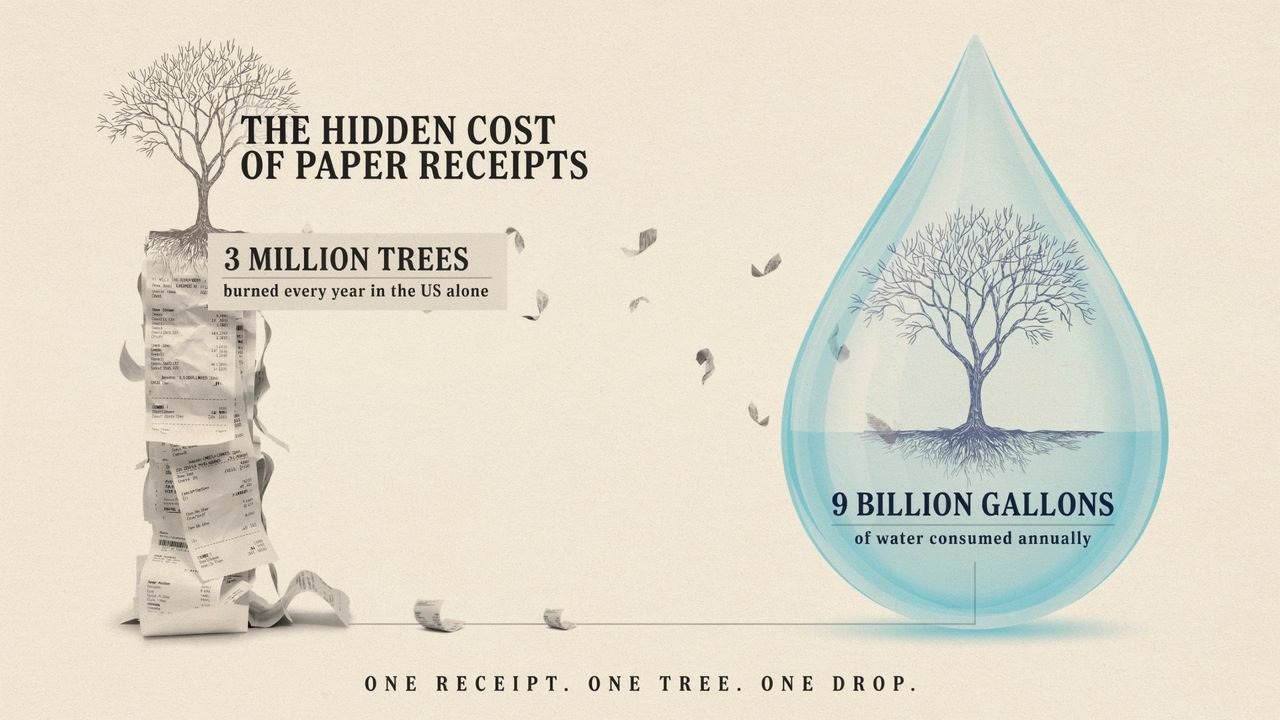
Digital also lasts longer, which is the opposite of what people assume. Thermal paper fades in heat, light, and friction. A slip kept somewhere warm can go blank inside a year. A backed-up file does not.
The real risk with digital is mess, not wear. An emailed receipt buried in an inbox is as good as lost. Save copies into dated folders, back up in two places, and the problem goes away.
Frequently asked questions
How long should I keep receipts for taxes?
Three years covers most US cases. Six years if you underreported income by more than 25%, and no limit at all if you never filed. The UK and Australia use 5 years, Canada 6.
Do I need to keep paper receipts if I have scans?
Generally no. The IRS has taken digital copies since 1997, and the scan just needs to be whole and readable. Canada is stricter, so check local rules before you shred.
What receipts can I throw away now?
Personal buys with no warranty, no return window, and no tax use. Also ATM slips once the charge clears your statement, and any tax-year folder whose window has closed.
Do I need a receipt for small purchases?
For US travel and transport under $75, no. You do still need a written note of the amount, date, place, and purpose. Lodging always needs one.
What if a receipt has faded and I cannot read it?
It is gone, which is why scanning matters. Photograph thermal receipts the week you get them instead of trusting the paper to last.
How long do I keep records for something I still own?
For good, if it shows what you paid. Property and big equipment records set your cost basis at sale, so they outlive the normal window.
Final thoughts
You must keep the receipts because a claim with no proof is just a claim. That holds for a tax deduction, an expense report, and a row with a supplier over a double charge.
The practical version is simpler than it sounds. Capture receipts digitally, file them by tax year, and bin a whole year once its window closes. That leaves a far smaller pile than most people carry.
Use Receiptmakerly to create polished, export-ready receipts in minutes.