Understanding the invoice vs receipt distinction is essential for every business, as confusing the two costs real money. Send a receipt when you meant to invoice and nobody pays you. Hand over an invoice as proof of payment and your buyer cannot claim the expense.
This guide covers the full invoice vs receipt comparison: what each document is, what each must contain, when to send them, and a side-by-side table you can check in ten seconds.
TL;DR
- An invoice asks for payment. A receipt proves it happened. Timing is the whole difference: an invoice goes out before the money, a receipt after it.
- A card terminal slip is not a VAT invoice. For UK purchases over £25 you need the supplier's VAT number and rate, or the buyer cannot reclaim.
- Most businesses need both documents, not one or the other.
- On a part payment, issue a receipt for what was paid and leave the original invoice open for the balance.
Invoice vs Receipt: Key Differences at a Glance
Criteria | Invoice | Receipt |
Purpose | Requests payment | Confirms payment |
Timing | Sent before payment | Sent after payment |
Reference number | Invoice number | Receipt number |
Due date | Required | Not needed, already paid |
Amount shown | Amount owed | Amount paid |
Outstanding balance | The full sum is outstanding | Zero, or any remaining balance |
Who relies on it | Seller chasing payment | Buyer proving the purchase |
Common in | B2B, freelance, services | Retail, hospitality, point of sale |
Used for tax by | Both parties | Both parties |
The rest of this guide fills in the detail behind each row.
What is an invoice?
A seller sends an invoice to request payment for goods or services. It lists what was supplied, what it costs, and how to pay.
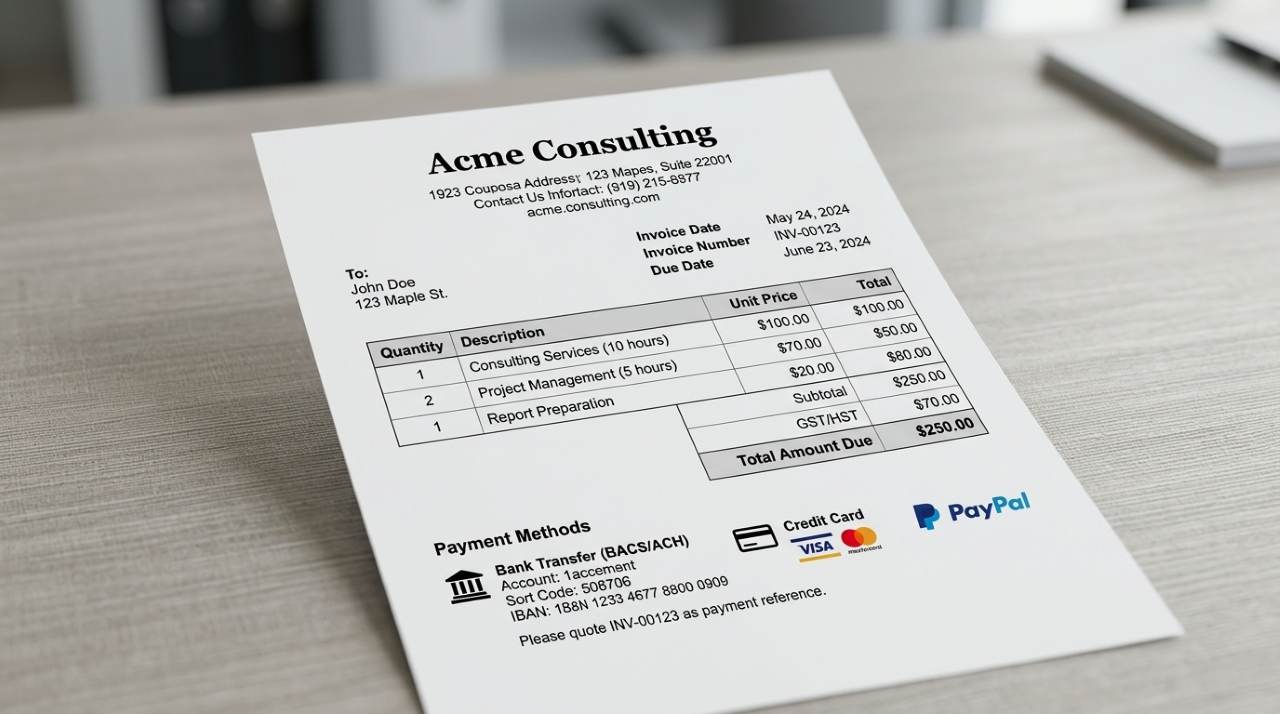
Customers get an invoice after the goods arrive but before they hand over money. Makers, wholesalers, and freelancers use them heavily. That includes service providers like writers and graphic designers, such as quotes designers. Any business that bills after a sale can use one.
What an invoice must include
- Sent to the payee before payment
- An invoice number
- Seller and buyer details: name, address, company logo and contact number
- A breakdown of what is being charged
- The accepted payment method
- The date the invoice was created
- The payment due date
- Any terms and conditions
- Most common in service work and business-to-business sales
One rule to know if you sell in the UK. On purchases over £25, the buyer needs a proper VAT invoice. It has to show your VAT number and the VAT rate. A card slip does not count. Leave those fields off and your buyer cannot reclaim the VAT.
Types of invoice
Most firms only ever use two or three. The full set runs:
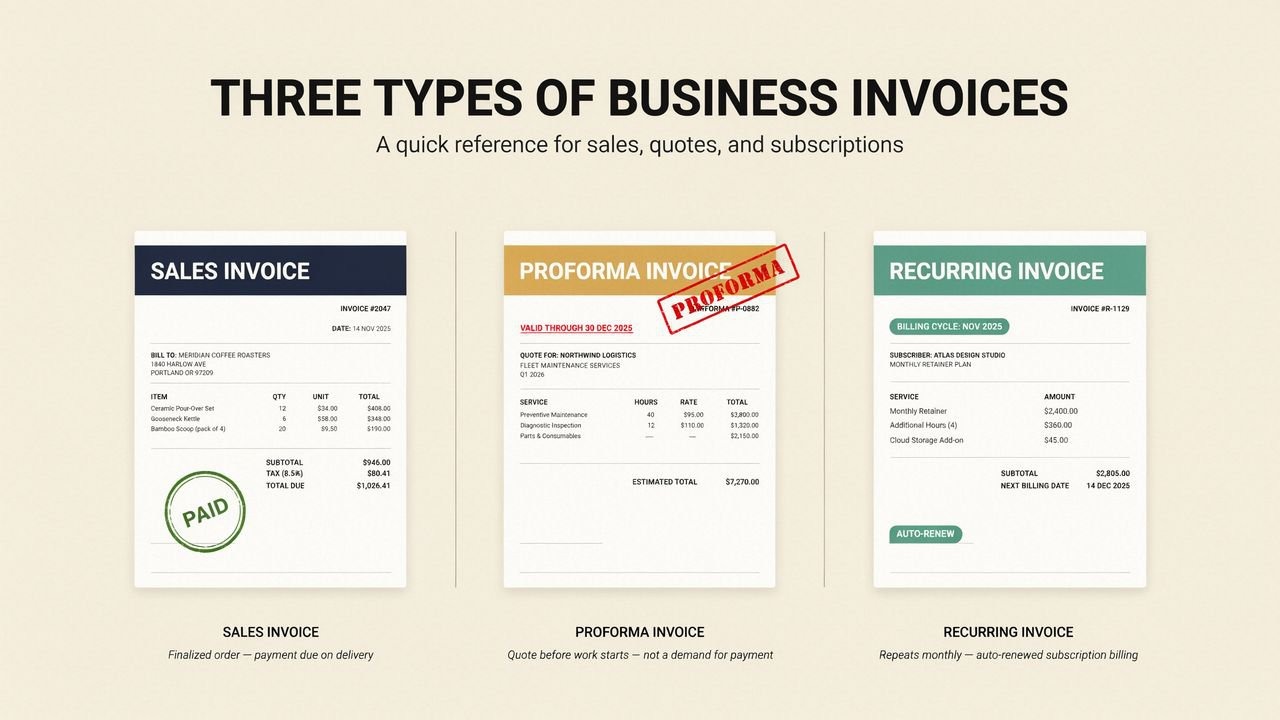
- sales,
- proforma,
- retainer,
- recurring,
- digital,
- pending,
- interim,
- debit,
- credit,
- tax, and
- marketing invoices.
You are most likely to need three. The sales invoice for a finished order. The proforma invoice for a quote before work starts. The recurring invoice for anything billed monthly.
How to make an invoice
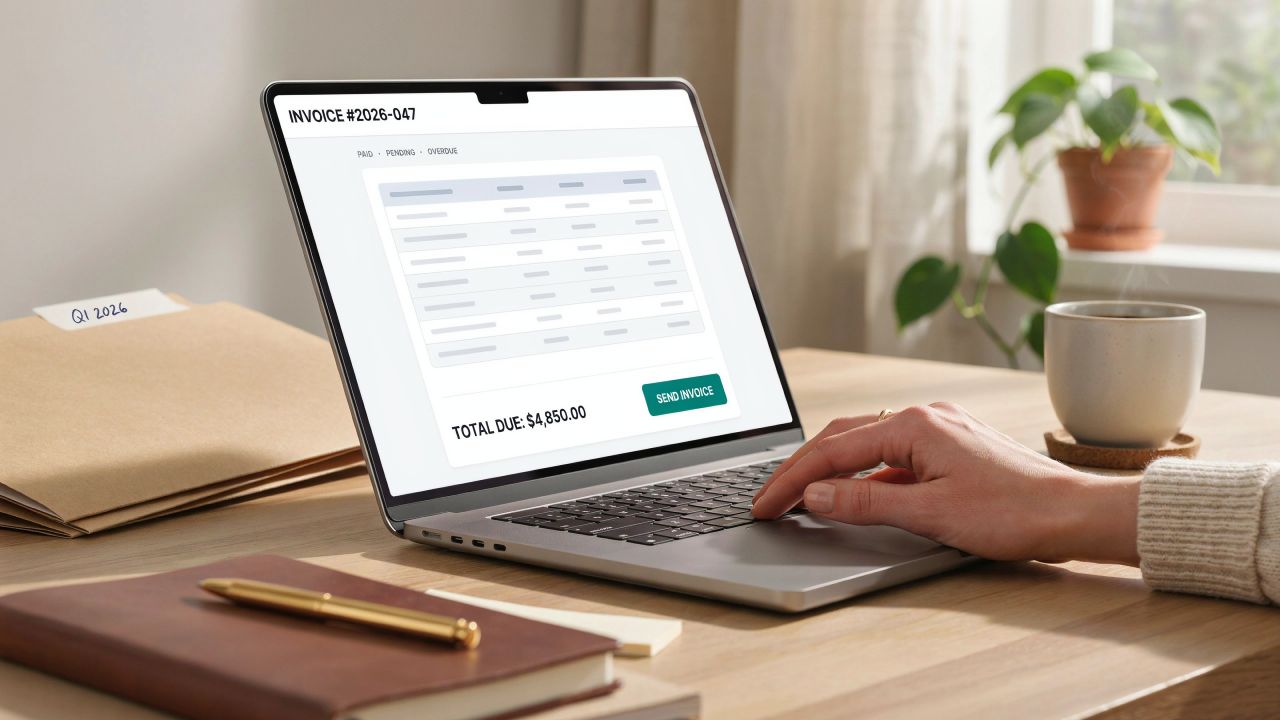
If you use a payment processor like Paddle or Stripe, you can raise an invoice inside it and get paid straight into the same system.
You can also build one by hand in MS Word, Google Docs, or a design tool. That stops working past a handful of clients. A smoother invoicing process usually means real software, and there are free invoice generator tools if you are not ready to pay yet.
When to send an invoice
Send it once the work is done or the goods are out, and before you expect payment.
Restaurants issue one when you ask for the bill. Online sellers use them to confirm items and counts. Freelancers send one when a project wraps. If you take phone or web orders, send the invoice at order time rather than later.
A short thank-you line at the bottom costs nothing and makes the next invoice easier to send.
What is a receipt?
A receipt is what a business gives a customer after payment. It verifies the money arrived, which matters to both sides.
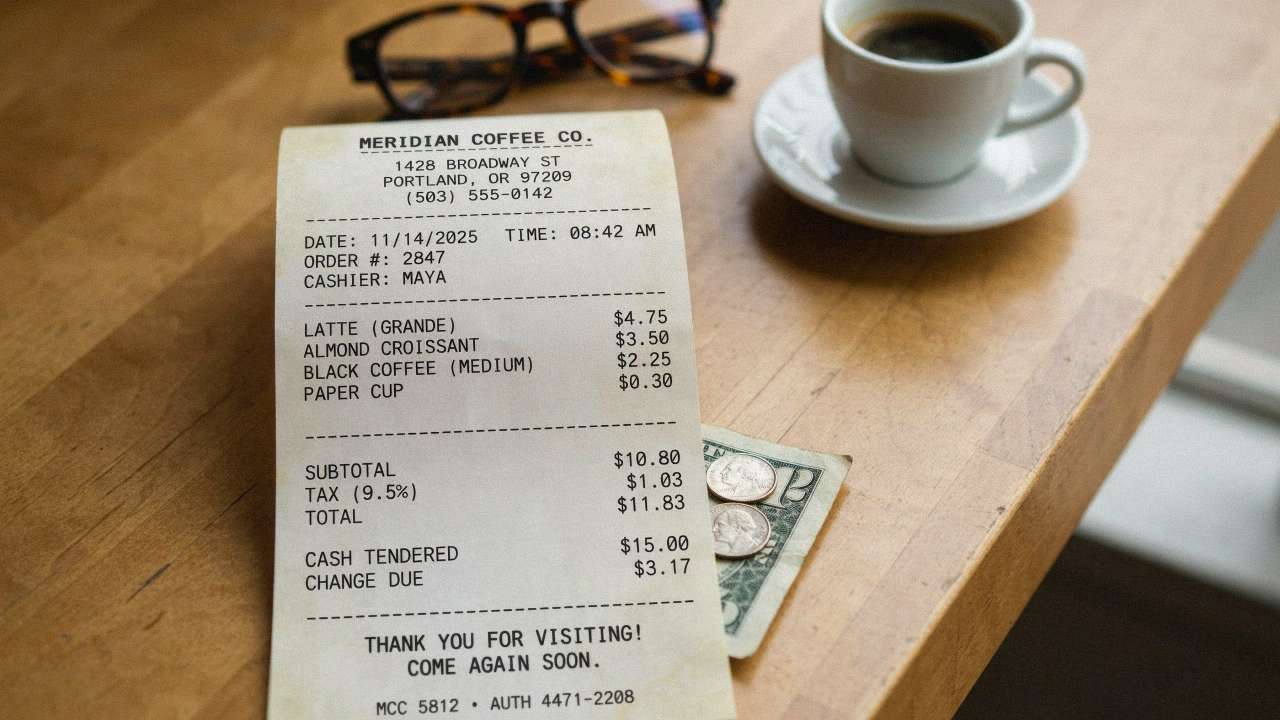
A payment receipt should carry your company details, the original invoice number, the payment date, the amount paid, and any balance left. An itemized receipt goes further and lists each item with its price.
Issue one every time a customer pays, deposits and part payments included. Buyers need them to return or swap goods. You need them to check the claim is real. That is why both sides should keep the receipts for later.
What a receipt must include
- Sent to the payee after payment
- A receipt number
- Seller and buyer details: name, address, and contact number
- A breakdown of what was paid for
- The payment method used
- The date the receipt was created
- No due date, since the bill is settled
- Any terms and conditions
Why receipts matter to a business
Receipts keep your records straight. Business receipts track spending and stand as tax proof.
They also make planning possible. Past costs tell you what next quarter looks like. Clean records are what tax filings get built from.
Types of receipt
The format barely changes between them, but the common types include Restaurant receipts, Store receipts, Parking receipts, Taxi receipts, Hotel receipts, Car rental receipts, Phone and internet bill receipts, Rent receipt, Groceries receipts, Gas/Fuel receipt, Tax receipts, Cash receipts, Construction receipts, Jewelry receipts, and Expense receipts.
When to use a receipt
Buyers need receipts to prove an expense happened. That covers tax write-offs and expense claims at work.
They also need one to return or swap something, subject to the shop's own terms. So the receipt matters on both sides of the counter.
If you are the buyer drowning in paper slips, various apps for receipt scanning will capture and file them for you.
How do I make a receipt?
Some shops print. Others send digital. Plenty of receipt maker tools exist, so the job is picking one that fits how you work.
Receiptmakerly can be a good option if you want receipts fast from ready-made templates. You get dozens of premium layouts, 19 currencies, automatic tax math, and PDF or image download.
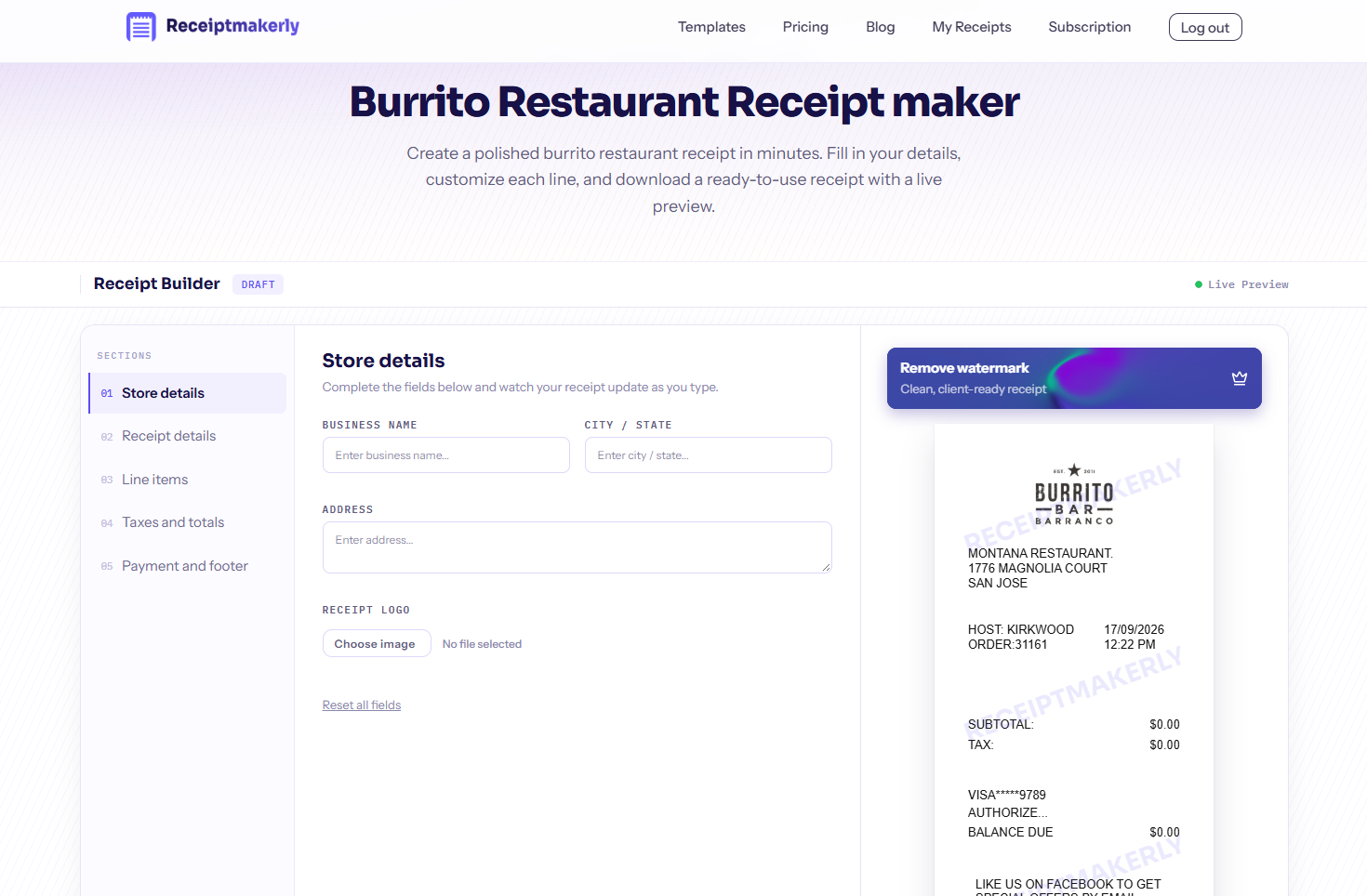
One boundary worth naming: Receiptmakerly makes receipts, not invoices. For the invoice side of the cycle, use a payment processor or dedicated invoicing software.
Frequently asked questions about invoice vs receipt
Is an invoice the same as a receipt?
No. When comparing an invoice vs receipt, the main difference comes down to timing and purpose: one requests payment, while the other confirms it. Same transaction, opposite ends.
Can one document be both?
Not really. A paid invoice stamped "PAID" comes close, and many small firms use it that way. If a buyer needs proof of payment for an expense claim, give them a proper receipt with the date and amount paid.
Which one do I need for tax?
Both, depending which side you are on. As a seller, invoices prove your income. As a buyer, receipts prove your costs. The IRS expects records that back up whatever you report.
Does a card terminal slip count as a receipt?
For general records, usually yes. For reclaiming UK VAT on anything over £25, no. You need a proper VAT invoice showing the supplier's VAT number and the rate charged (HMRC, 2026).
Do I send an invoice or a receipt to a customer paying upfront?
A receipt. If they pay at the till, there is nothing to chase. The document you owe them is proof of payment.
What if a customer only pays part of the invoice?
Issue a receipt for the amount paid and show the balance left on it. The original invoice stays open for the rest.
Key takeaways
The distinction comes down to one question: has the money arrived yet?
Before it arrives, you send an invoice with a due date and an amount owed. After it arrives, you send a receipt with a payment date and an amount paid. Most firms need both. Using the wrong one at the wrong moment is what causes late payments and rejected expense claims.
Use Receiptmakerly to create polished, export-ready receipts in minutes.